Element study · Water

Water Element Lesson

Flowing, cleansing, carrying, reflecting. A table lesson, a movement lesson, a story lesson, a reverence lesson.

Pairs well with Monday (Moon day).

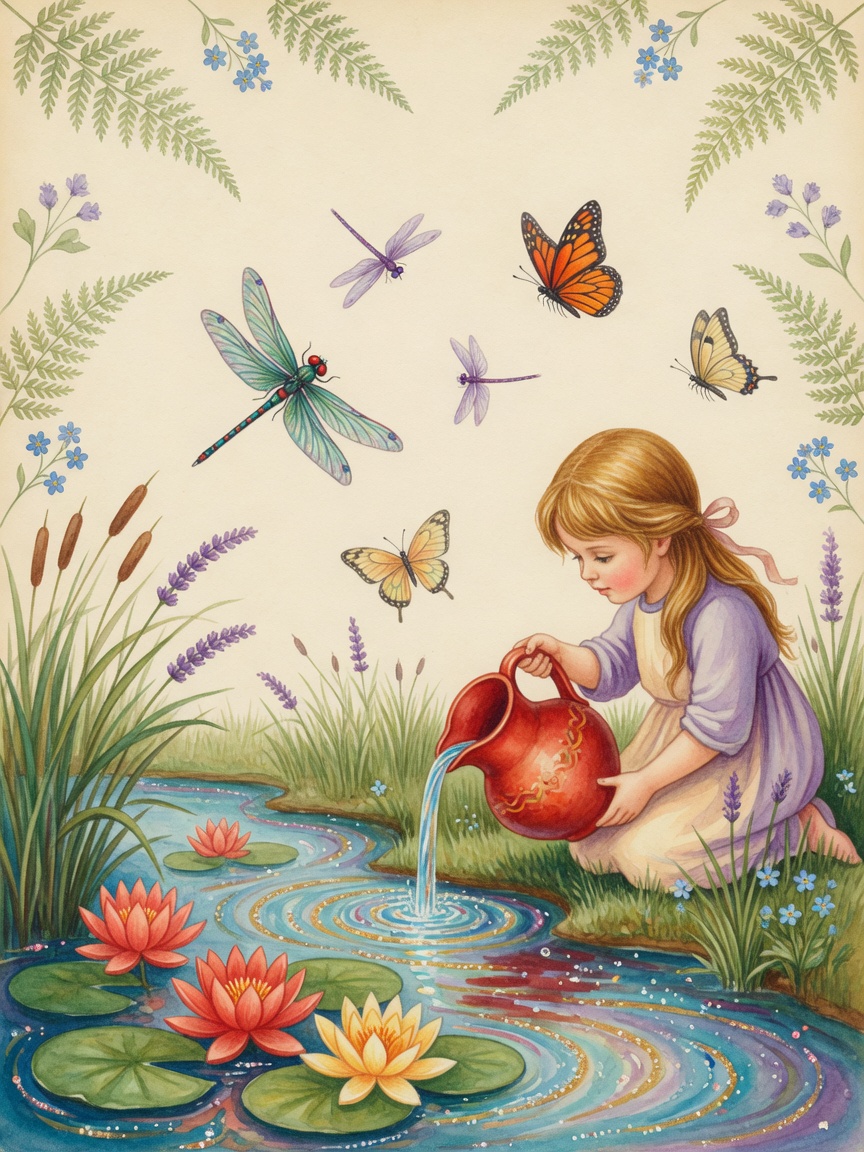
Watercolor of a child pouring water at a stream among reeds and dragonflies

Aim

To let the child meet Water as a living element: flowing, cleansing, carrying, reflecting, softening, and returning.

This is not a worksheet lesson. It is a table lesson, a movement lesson, a story lesson, and a reverence lesson.

By age

Littles (3–6): the story, the bowl, and wet hands are the whole lesson. Let them pour, float, and watch. No questions required.

Olders (7+): after the story, ask where the drop travels; paint the journey in three blues and write one line — Water falls, flows, rests, returns.

Materials

  • Grimm's four-elements puzzle, using the blue Water pieces
  • Blue silk or playsilk
  • Small bowl of clean water
  • Shells, smooth stones, blue glass gems, or wooden rings
  • Blue watercolor paint, brush, water jar, watercolor paper
  • Cloth for drying hands
  • Optional: small felt child, gnome, fish, swan, moon, or star figure

Opening Verse

Water flows and water sings,
Over stones and under wings.
Rain to river, stream to sea,
Water washes, carries me.

Gentle hands and listening heart,
Let the water lesson start.

Element Song

Sing gently to the tune of “Frère Jacques.” Add flowing hand movements. The melody plays twice—once for each verse.

Water flowing, water flowing,
To the sea, to the sea.
Falling down as raindrops,
Running through the river,
Wild and free, wild and free.

Water shining, water shining,
Clear and bright, clear and bright.
Giving every creature,
Every tree and flower,
Gift of life, gift of life.

Set The Table

Lay the blue silk across the table like a river. Place the bowl of water near the center.

Put the Water puzzle pieces beside it, from lightest blue to darkest blue if possible. Let the child notice the shades before naming them. The light blue can be rain, the middle blue can be river, the darkest blue can be deep ocean.

Light a candle only if you are present and want the mood. Otherwise, keep the table simple and calm.

Story

Tell this slowly, moving the puzzle pieces as the story unfolds:

Once there was a little drop of water sleeping in a soft gray cloud. The cloud rocked gently in the sky until the little drop grew round and heavy.

Down she fell.

She landed on a leaf, slipped to a stone, and joined a tiny stream. The stream did not hurry. It knew the old path. Around the roots, between the grasses, over the pebbles, it sang its way forward.

The little drop met other drops. Together they became a brook. The brook became a river. The river carried leaves, cooled the deer, gave drink to the birds, and turned the stones smooth.

At last the river reached the wide sea. The little drop felt herself become part of something deep and blue and shining. At night, the moon looked down and made a silver road across the water.

Then the sun warmed the sea, and the little drop rose again, light as breath, back into the sky.

Water falls. Water flows. Water rests. Water returns.
Puzzle Work

Invite the child to build: - A raindrop - A stream - A river bend - A pond - A wave - The deep sea

Use the nested blue curves to show water's movement. Let the child make the water wide, narrow, curled, still, or stormy.

Ask only simple noticing questions: - Where is the water still? - Where is it moving? - Which blue feels deep? - Which blue feels like rain? - Can the water find a path?

Do not correct the design unless pieces are being handled roughly. The goal is relationship with the element, not accuracy.

Movement

Stand and move like water: - Rain falling with soft fingers - Stream flowing around stones - River widening - Wave rising and falling - Ice becoming still - Snow melting back into water

Use the silk. Let the child ripple it, lift it, lower it, hide a shell beneath it, and reveal it again.

Watercolor Painting

Paint only with blues today.

Wet the paper first. Let the child watch the water shine on the page before adding color.

Offer three blue moods: - Pale blue for rain - Turquoise for stream - Deep blue for ocean

Say: Water likes to move. We do not need to force it.

Let the colors bloom, run, soften, and meet. This is the lesson.

Practical Work

Choose one real water task: - Water a plant - Wash a small cloth - Rinse berries - Fill a vase - Wipe the table with a damp cloth - Pour water carefully from one small pitcher to another

The practical task matters. It teaches that Water is beautiful, but also useful and needed.

Spiritual Meaning

For the parent:

Water teaches gentleness without weakness. It yields, but it shapes stone. It cleanses without shouting. It carries life in hidden ways. It reflects light when it is still.

For the child, keep it simple:

Water helps life grow. Water washes clean. Water can be still. Water can move. We care for water, and water cares for the living world.

Closing Verse

Thank you, water, clear and bright,
Morning rain and moonlit night.
River, ocean, drop, and dew,
May our hearts be gentle too.

Extension Ideas

  • Read a story with rivers, rain, wells, ponds, or the sea.
  • Visit a creek, fountain, lake, or puddle after rain.
  • Freeze water overnight and observe ice the next morning.
  • Add shells and blue stones to the seasonal table for the week.
  • Pair with Monday Moon day if using the planetary weekday rhythm.

Parent Note

Water lessons should feel hushed, sensory, and reverent. The child should leave with wet fingers, blue on the page, a calmer body, and a sense that water is alive in the household rhythm.

After the living lesson

Carry Water Through the Week

The original lesson above is complete. These are optional invitations for families who want to stay with Water for several days. Choose one, or follow the whole week.

Time15–30 minutes each
Ages3–6 together · 7+ goes deeper
RhythmNotice · Try · Make · Carry
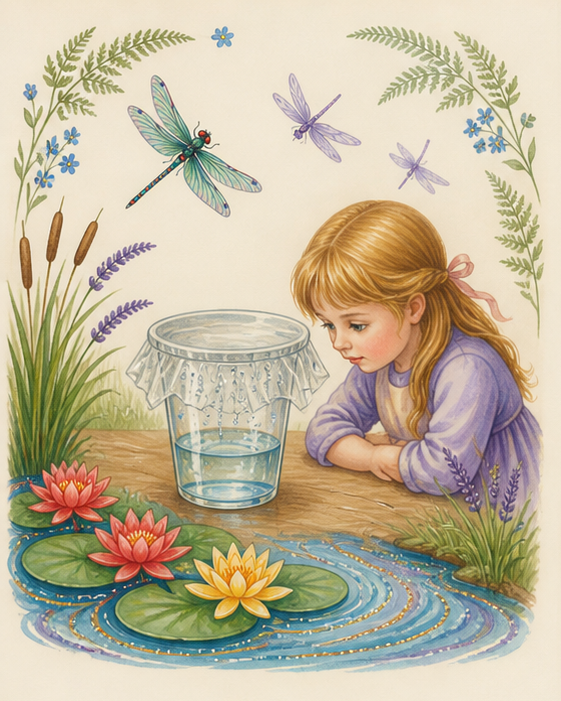
Watercolor of a child observing droplets form in a covered glass

Discover: Water Changes

Watch liquid water become vapor, droplets, and ice without turning wonder into a lecture.

Open this invitation
  • Cover a warm glass of water and watch droplets gather.
  • Freeze a small bowl overnight, then notice how it melts.
  • For 7+: draw the journey—water, vapor, cloud, rain.
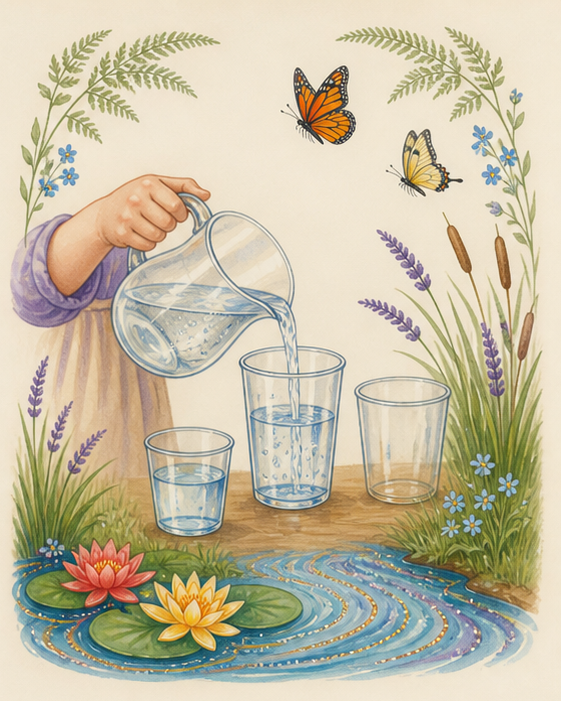
Watercolor of careful measuring and pouring with clear cups

Measure & Tell

Use real pouring for early mathematics, then give the movement of water beautiful language.

Open this invitation
  • Fill, empty, compare, and order three vessels.
  • For 7+: measure cups, halves, and quarters.
  • Collect water words: drip, ripple, rush, pool, reflect.
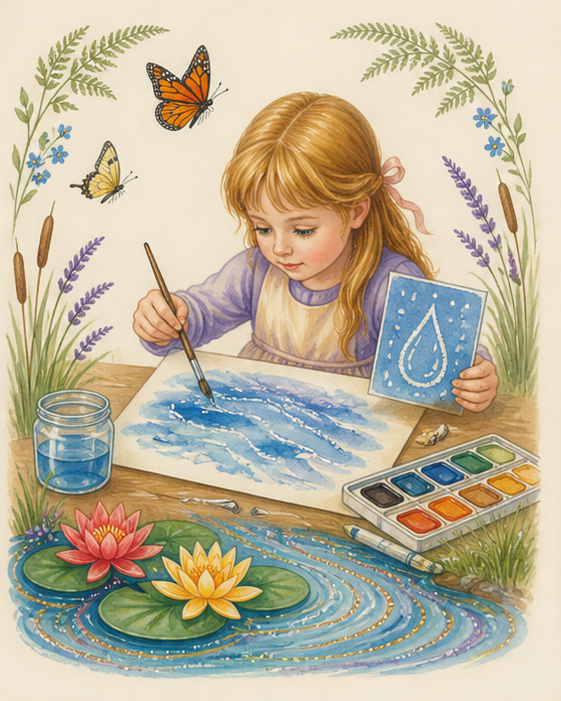
Watercolor of a child painting blue water and a wax-resist raindrop

Make: Rain & River

Let blue move across wet paper, then reveal a raindrop that was quietly waiting underneath.

Open this invitation
  • Draw raindrops in white wax before wetting the page.
  • Brush pale, turquoise, and deep blue across the paper.
  • Add no outline; let the water make the edges.
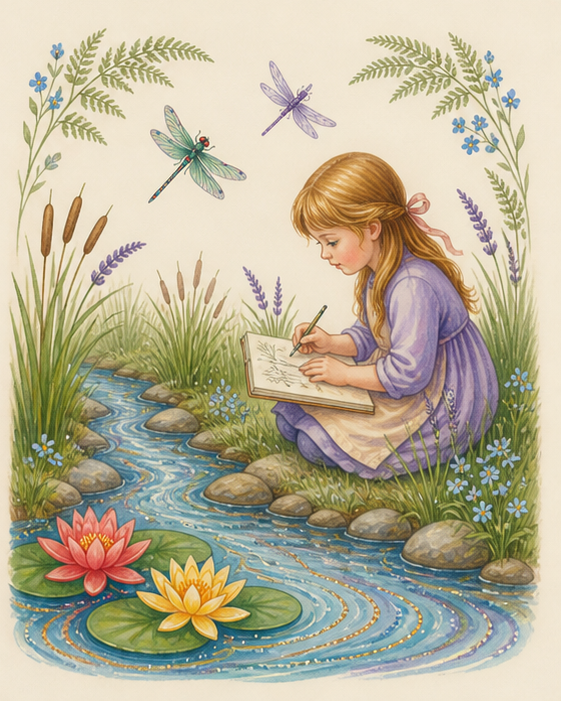
Watercolor of a child keeping a nature journal beside a creek

Outdoors: Follow the Flow

Find moving water outside and notice what it carries, reflects, smooths, and nourishes.

Open this invitation
  • Visit a creek, fountain, pond, or rain puddle.
  • Find one still place and one moving place.
  • Sketch the water’s path without trying to perfect it.

A Simple Five-Day Water Rhythm

Day 1 · Meet

Do the original Water lesson.

Day 2 · Notice

Watch droplets, ice, or steam with an adult.

Day 3 · Measure

Pour and compare; olders use cups and fractions.

Day 4 · Make

Paint rain, river, and deep sea.

Day 5 · Carry

Walk to water and do one household water task.